


Oceanography
- skillarium academy
- Nov 13, 2024
- 4 min read

Oceanography is the scientific study of the ocean’s physical, chemical, biological, and geological aspects. Oceans cover more than 70% of the Earth’s surface and are critical for life on Earth, influencing global climate, weather patterns, and the water cycle. the tools and techniques used by oceanographers, the importance of oceanography in understanding environmental changes, and the pressing need to protect our oceans. Oceanography, often called marine science, is a multidisciplinary field encompassing various aspects of the ocean. This vast field can be divided into four main branches:
Physical Oceanography: Studies the physical properties and processes of the ocean, such as waves, tides, currents, and temperature. Understanding these dynamics is vital for navigation, fishing, and understanding climate systems. Chemical Oceanography: Examines the chemical composition of seawater, the distribution of chemicals within the ocean, and how these chemicals interact with the atmosphere and marine life. Topics include the ocean’s salinity, the carbon cycle, and ocean acidification. Biological Oceanography: Focuses on the diverse forms of marine life, from tiny plankton to large whales, and how they interact with their environment. It explores the structure of marine ecosystems, food webs, and the impact of human activities on ocean biodiversity. Geological Oceanography: Studies the geology of the ocean floor, including its structure, sediments, and tectonic activity. The ocean floor is a record of Earth’s history, revealing information about volcanic activity, plate tectonics, and even climate changes over millions of years. Each of these branches provides crucial insights into the ocean’s role in sustaining life on Earth, the movement of nutrients, and the ocean’s influence on global climate.
The oceans are critical to regulating Earth’s climate and absorbing carbon dioxide from the atmosphere. Oceanography plays a central role in understanding these processes and their impact on environmental change: Climate Change: The ocean absorbs a significant portion of the heat from global warming and excess CO₂ from the atmosphere, which leads to ocean warming and acidification. Oceanographers study these changes to predict how marine ecosystems will respond and how these shifts will affect global weather patterns and sea level rise. Ocean Acidification: Increased CO₂ absorption has caused the ocean’s pH to decrease, making it more acidic. This affects marine organisms, particularly those with calcium carbonate shells or skeletons, like corals and shellfish, making it harder for them to survive. Sea Level Rise: As global temperatures rise, glaciers and polar ice caps melt, contributing to rising sea levels. Additionally, water expands as it warms, further increasing sea levels. Physical oceanographers measure these changes to predict their impacts on coastal areas. Marine Pollution: Chemical and biological oceanographers study pollutants such as plastics, heavy metals, and oil spills that affect marine ecosystems. Understanding how pollutants spread and degrade is vital to mitigate their impact on marine life and human health. Oceanography provides valuable data for making informed decisions about climate policy, marine conservation, and environmental management.
Tools and Techniques in Oceanography
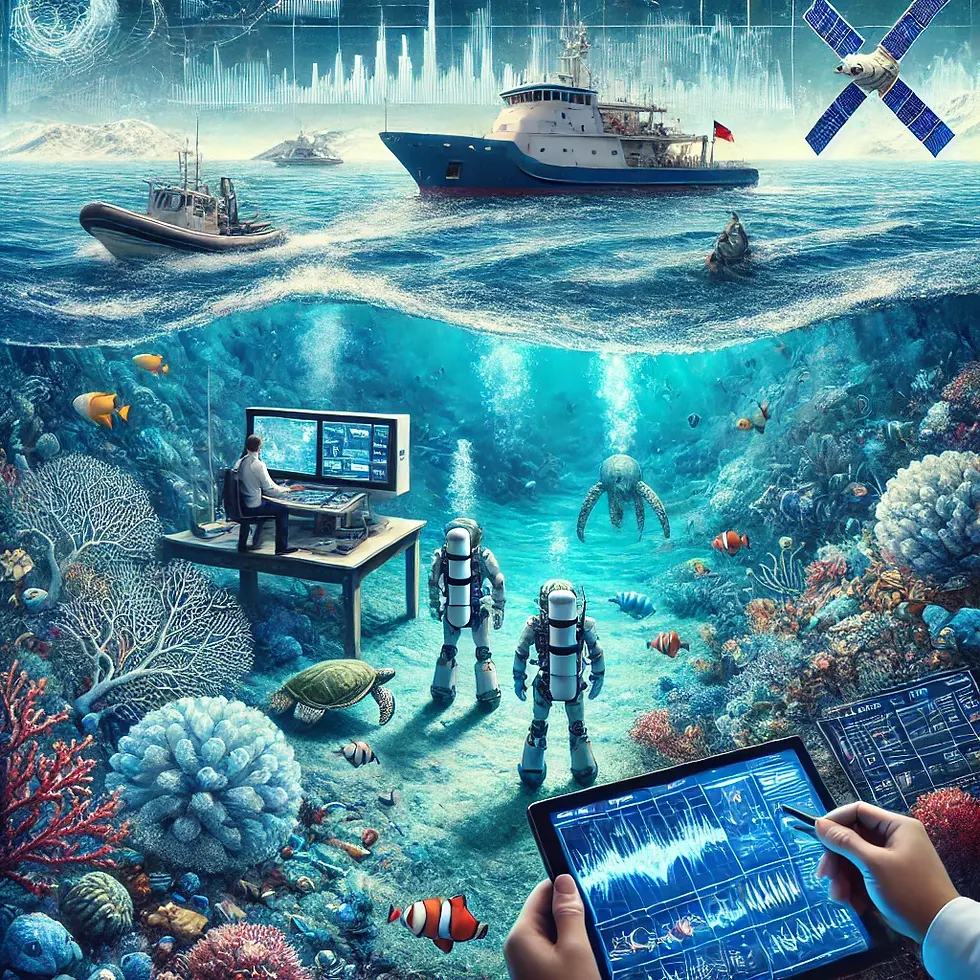
Satellites: Satellites orbiting the Earth can measure sea surface temperature, ocean color, and even the height of the sea surface. Satellite data help scientists monitor changes over time on a global scale.
Research Vessels: Ships equipped with advanced technology allow oceanographers to conduct research on the open sea. These vessels can carry instruments to measure water temperature, salinity, and depth and to collect water and sediment samples.
Underwater Robots (ROVs and AUVs): Remotely Operated Vehicles (ROVs) and Autonomous Underwater Vehicles (AUVs) are used to explore deep-sea environments where humans cannot go. They are equipped with cameras, sensors, and robotic arms to collect samples and data.
Sonar Mapping: Sonar technology is used to map the seafloor. It sends sound waves from a ship to the ocean floor and measures how long they take to return. This helps in creating detailed maps of underwater topography.
Buoys and Floats: Oceanographers deploy buoys and Argo floats to measure temperature, salinity, and currents at various ocean depths. These devices are often left in the ocean for months or years, providing valuable data on changes over time.
Coral Bleaching and Climate Change
Coral reefs are among the most biodiverse ecosystems, supporting countless marine species. However, rising ocean temperatures have led to coral bleaching, where corals expel the algae that give them their color and energy, leading to coral death. Biological oceanographers study coral bleaching events to understand their causes and develop conservation strategies.
The Great Pacific Garbage Patch
Chemical oceanographers have studied the accumulation of plastic debris in the ocean, most famously in the Great Pacific Garbage Patch. Ocean currents gather millions of tons of plastic in this area, harming marine life that ingests or becomes entangled in debris. Studies of this patch are crucial for developing strategies to reduce plastic pollution.
Ocean Currents and Climate Patterns
Physical oceanographers study major ocean currents, such as the Gulf Stream and the El Niño-Southern Oscillation (ENSO). Changes in these currents can alter weather patterns, influence fish populations, and impact global temperatures. Monitoring these currents helps predict natural phenomena like hurricanes, droughts, and heavy rainfall events.
The Need for Ocean Conservation and Sustainable Practices
The knowledge gained from oceanography highlights the urgent need to conserve the ocean. Human activities, including overfishing, pollution, and coastal development, have severely impacted marine ecosystems. Sustainable practices are essential to protect these ecosystems, as they provide critical resources like food, medicine, and carbon sequestration.
Efforts to protect the ocean include:
Marine Protected Areas (MPAs): Designating areas where human activities are restricted to conserve marine habitats and biodiversity.
Reducing Pollution: Limiting plastic use, regulating chemical runoff, and preventing oil spills are crucial steps.
Sustainable Fishing: Overfishing has depleted fish stocks worldwide. Sustainable fishing practices ensure that fish populations remain stable and that ecosystems are not damaged.
Oceanography is vital in understanding the mysteries of the ocean and the crucial role it plays in regulating our planet’s climate and supporting biodiversity. Through the study of ocean physics, chemistry, biology, and geology, oceanographers contribute to our knowledge of the ocean's role in environmental stability and highlight the urgent need for conservation. As threats like climate change and pollution continue to impact marine environments, oceanography will be essential in guiding humanity's efforts to protect and preserve our oceans for future generations.


Comments